A conservation group has released 80 juvenile sand lizards, one of the UK’s rarest reptiles, into the wild in Hampshire.
Marwell Wildlife, led by PhD student Rachel Gardner, released the lizards onto Eelmoor Marsh Site of Special Scientific Interest near Farnborough as part of a three-year release plan and research project.
Radio tags weighing less than 0.3 grams were used to assess the animals’ activity, and the lizards were tracked upon their release into the wild.
The research included evaluating behaviour, habitat use and survivorship of individuals, which are uniquely identifiable by their spot patterns.
Ms Gardner said: “We have seen some unexpected behaviours, for example, some individuals travelled over a hundred metres away from the release site within just a couple of weeks.
“Considering the size of the animals [a few centimetres long] and the complexity of the heathland environment, this is quite a distance in such a short space of time.”
Once common across heathlands of southern England, sand lizard numbers have depleted due to habitat loss, and they are now only found in a handful of sites in southern England, Wales and Merseyside.
Marwell Wildlife, as part of its conservation programme, has now brought the total number of sand lizards reintroduced to Eelmoor Marsh to over 240 individuals, with the aim to establish a self-sustaining population.
Ms Gardner said: “It’s been a privilege to work on this project and observe the sand lizards in such detail.
“We hope the research will help inform and make recommendations for the reintroduction protocol in the future, and therefore help optimise its conservation success.” - PA Media
Was Prince really so mean? Sinead O’Connor has accused the musician, deceased in 2016, of attempting to “beat her up” and leaving a female member of his band with broken ribs.
“Prince tried to beat me up,” she told Piers Morgan and Susanna Reid on Good Morning Britain.
“It was a very frightening experience. He summoned me to his house one night and I foolishly went alone. He was uncomfortable with the fact I wasn’t a protégé of his and that I’d just recorded the song.”
She continued: “He was wanting me to be a protégé of his and ordered that I don’t swear in my interviews. I told him where he could go and he went for me. He went upstairs and got a pillow and he had something hard in the pillow. I ran out of his house, hiding behind a tree.
“We met on the highway in Malibu at five in the morning – I’m spitting at him, he’s trying to punch me. I had to go ring someone’s doorbell, which my father always told me to do if I was in a situation like that.”
O’Connor said the singer was “into some pretty dark drugs at the time” and added: “I’m not the only one he went at.
“One of the girls in his band was in the hospital with broken ribs at the time.”
She also claimed there were other women who were attacked by the singer and said they should come forward to share their stories.
Last week, O’Connor apologised for saying she “never wants to spend time with white people again” following her conversion to Islam.
Prince’s estate has not replied yet to O’Connor’s accusations.
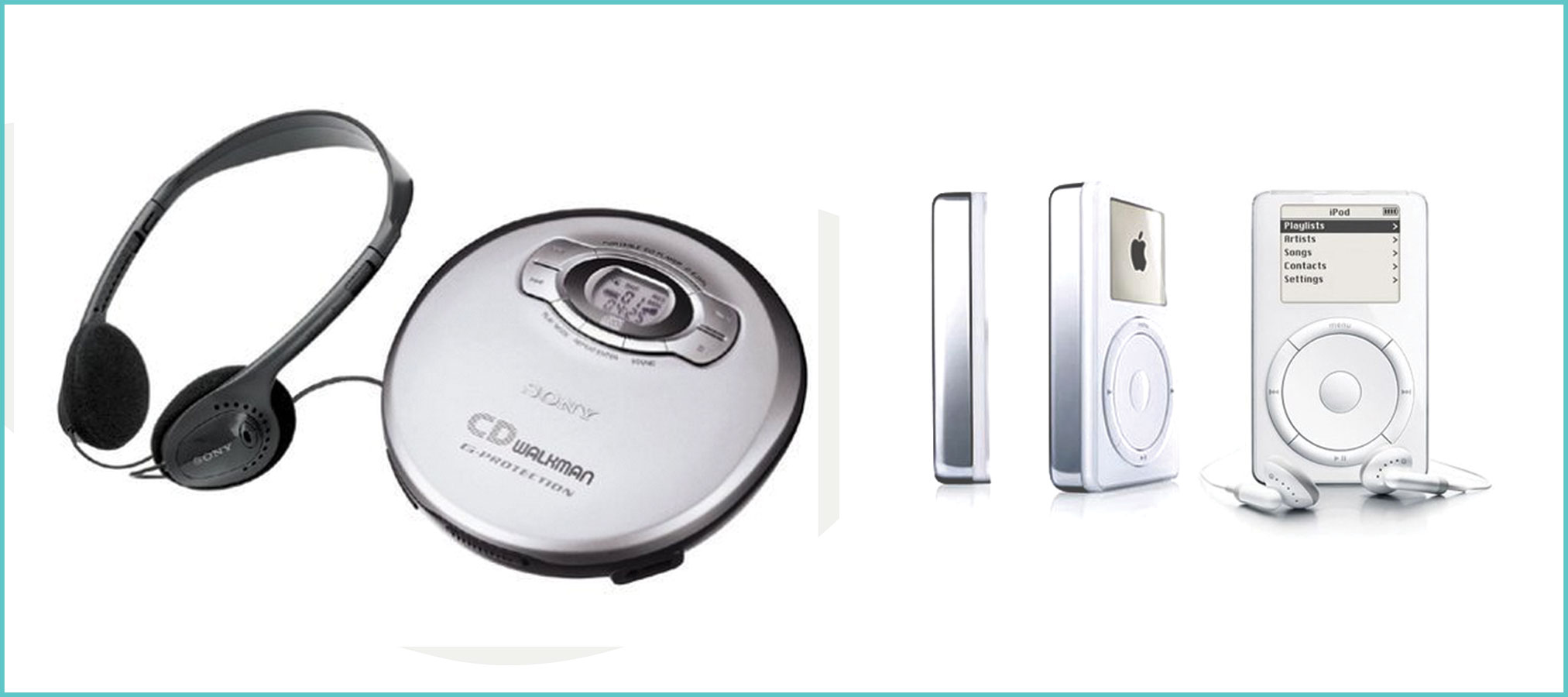
In 1991, if you’d suggested making a pair of white headphones, people would have laughed at you. Headphones were black, they said. Everyone knew that. They went over your ear, and they plugged into large, square computers or MP3 players, which were grey or black themselves. Technology was what sold high-end audio and computing products; the processing power of an Amstrad or a PC was what attracted a consumer’s interest. Only an idiot would care what his computer looked like. Ten years later, Jony Ive and Steve Jobs would prove them wrong, taking the audio technology market by storm with their sleek new (white!) Apple iPod and graceful accompanying earbuds. Well, half wrong – technical specs like processing power were still important. But design was too. Jobs and Ive would sell 100m units in the next six years.
We’ve come a long way since then. It’s now a truism to say that aesthetic design is as important as the raw power, the actual capability, of a product, but it bears repeating nonetheless. Your headphones need to look good as well as produce crisp sound quality, or kids won’t wear them in public. A sleek, well branded laptop will dominate the market against a cheaper, uglier model with the same specifications. Often, a car’s reputation relies as much upon how it looks as how it performs. This is the paradox of desirability: that different people place different value on aesthetic and performance variables. And everyone has different tastes. Some brands cater better to those who like beautiful objects, and some appeal to those who want unrivalled functionality, but every successful creator knows how to effortlessly merge the two.
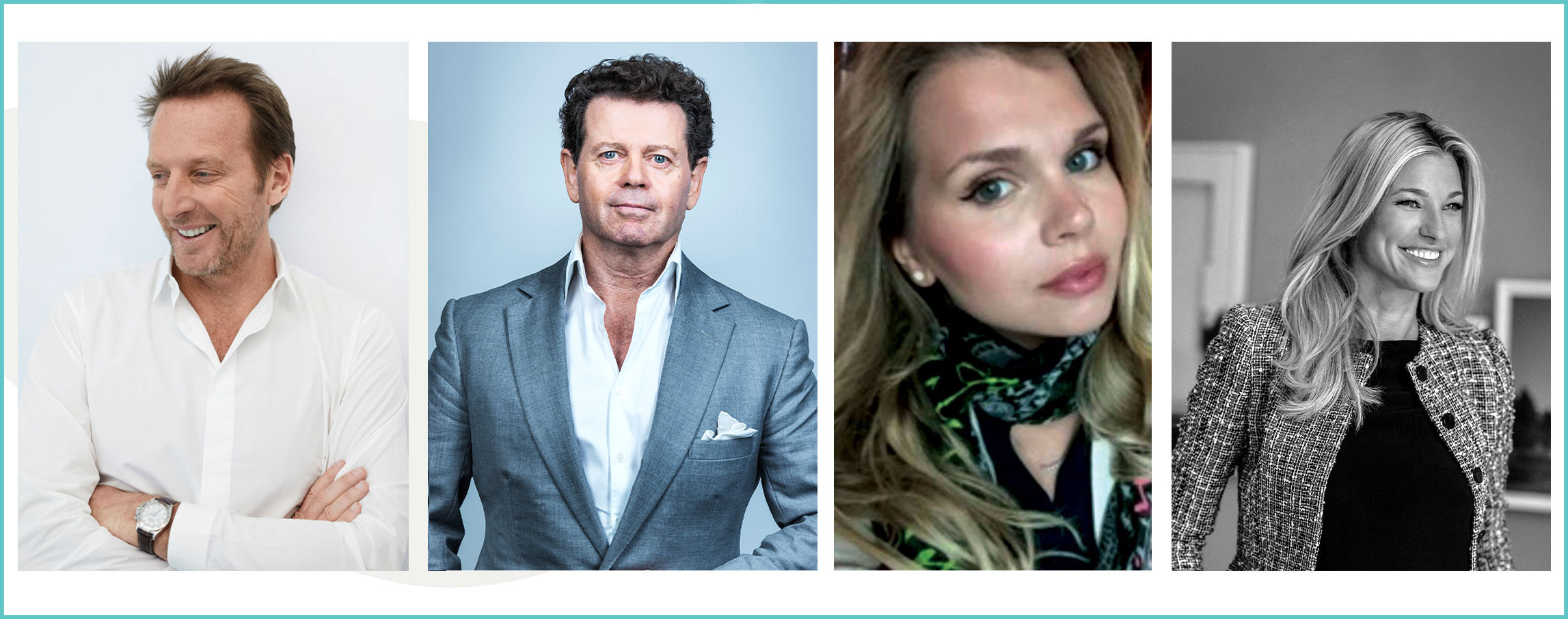
It was this pairing of functionality and form that Jean-Christophe Chopin had in mind when he founded the BORN Series. Encapsulated in the three pillars of design excellence – desirability, functionality and being made with integrity – the winners of the 2019 BORN Series in association with Land Rover are all members of the BORN Society whose work has been judged as at the head of their field by an expert jury: Gerry McGovern, Chief Design Officer at Land Rover, Nathalie Bernce, CEO of SmarTech, and Nicole Junkermann of NJF Capital.
The judges chose winners and nominees in the Technology category on the explicit theme of “Desirability”. Over a triumphant Milan Design Week, the winners from France, Italy and Spain were announced to the world with an exhibition that coincided with the 500th anniversary of the death of the city’s most famous artist, Leonardo da Vinci, a man as well known for the desirability and beauty of his art as the innovation of his masterful inventions.
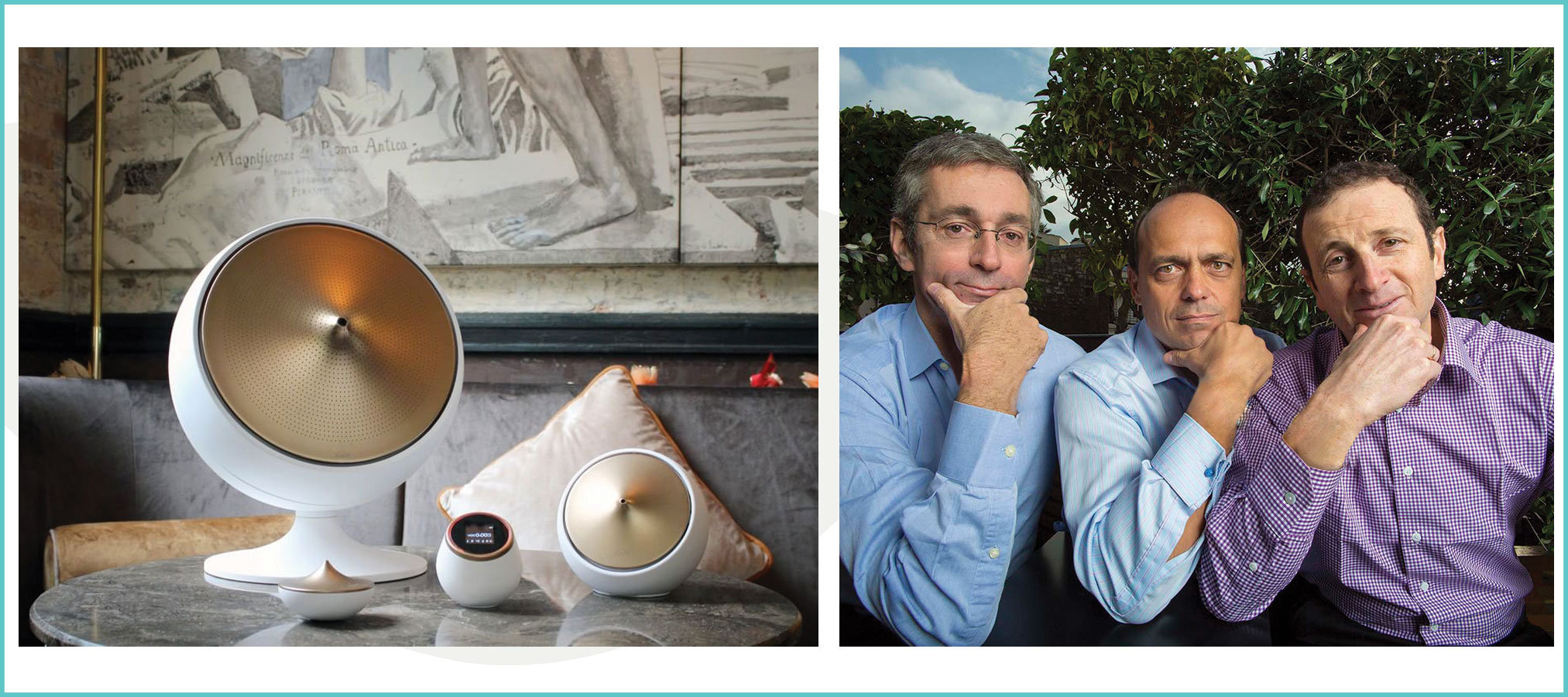
From France, Nicolas Moulin, Olivier Partrat and Jean-Christophe Dol’s Olfinity indoor air system took first place: an air purifier with an almost gong-like design, reminiscent of a record player, perhaps, that can soothe and calm to the same effect – the beginning of an olfactory journey to transport you to a Buddhist temple, a Parisian salon, or anywhere in between.
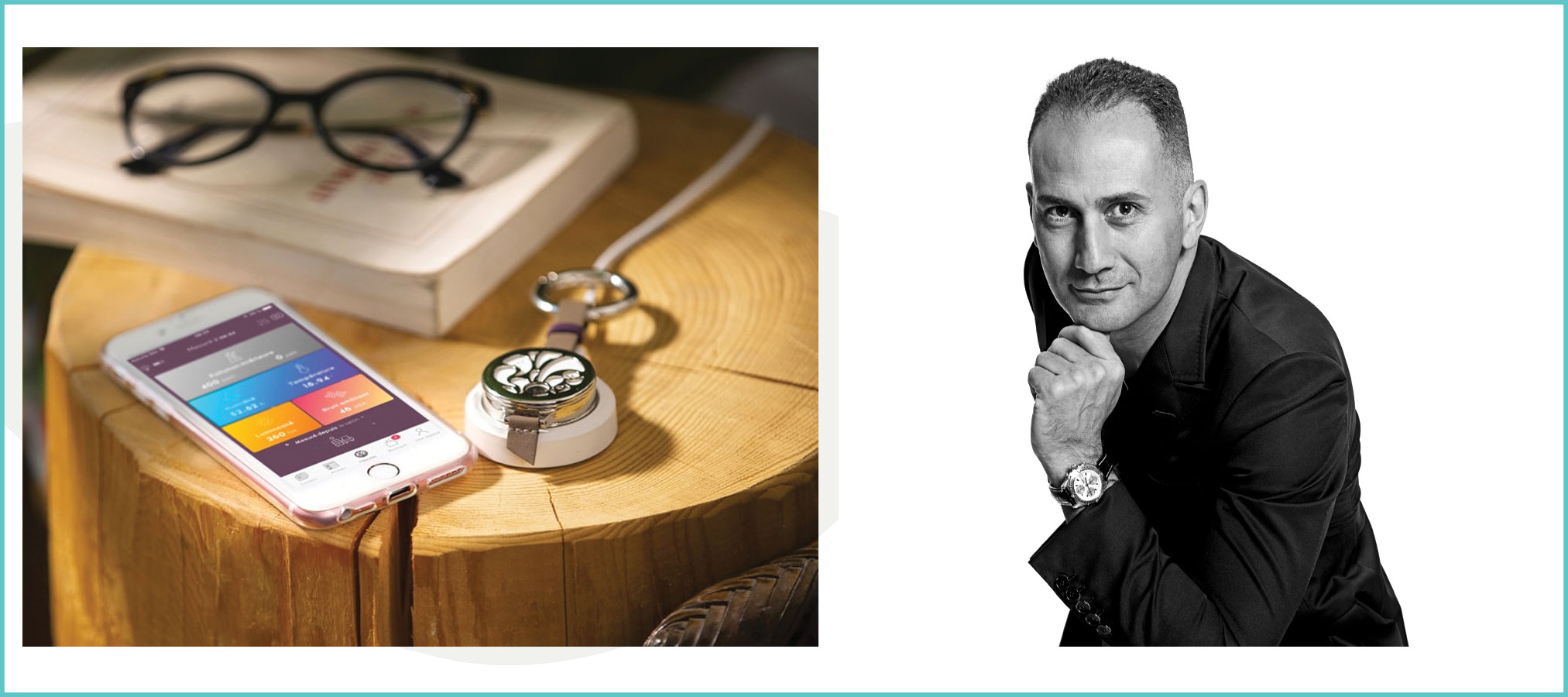
Meanwhile, nominee Jean-Michel Karam’s Ieva Twin-C was also recognised; a device whose design draws on the desirability of watches, channelling the traditional historic grace of Swiss haute horlogerie, but whose function is decisively forward-thinking, helping its user measure air pollution, luminosity, noise, temperature, humidity, and ultraviolet activity to understand how they can improve their wellness and environmental awareness.
The Spanish prize for Technology was won by Glovo, the on-demand app designed by Oscar Pierre that connects customers to independent local couriers, who then deliver goods to them from any restaurant or shop in a city, or take packages from users for delivery without delay. Anything from pizza one evening if you don’t feel like cooking, to medicine from the local pharmacy if you’re ill and can’t leave the house; Glovo streamlines and removes the stresses of modern life.
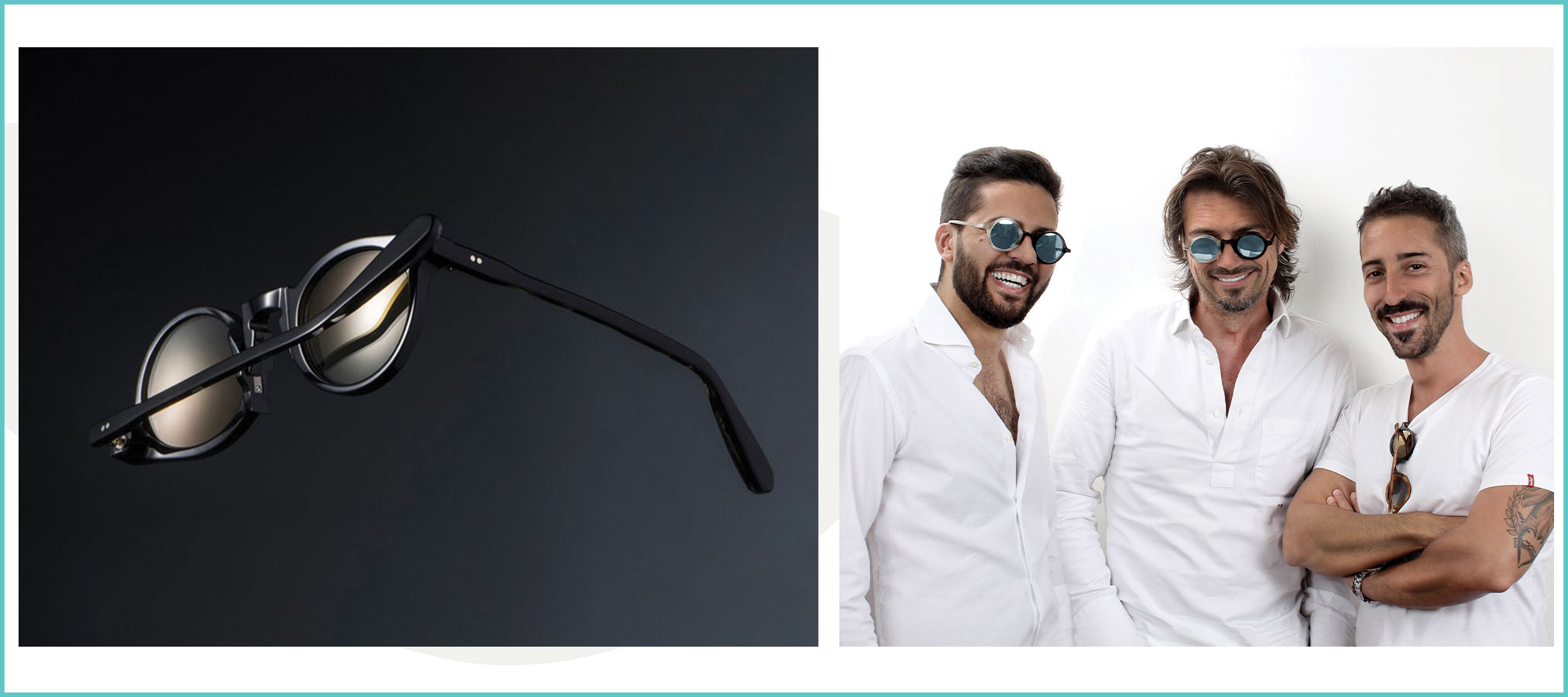
And from Italy – arguably the historic home of design excellence, as evidenced by Milan Design Week – there were a plethora of brilliant creators nominated. Notably, Filippo Pagliacci, Giuseppe Pizzuto & Diego Ponzetto (a.k.a. Movitra)’s Tytus titanium crash-proof glasses won the Special Functionality Prize for a patented concept so thrillingly simple that it’s astounding no-one had made these glasses before: they fold across the bridge of the nose, then rotate 180 degrees to leave the lenses facing different directions. Fold the arms down, and they’re now on either side of each lens, protecting it from scratches.
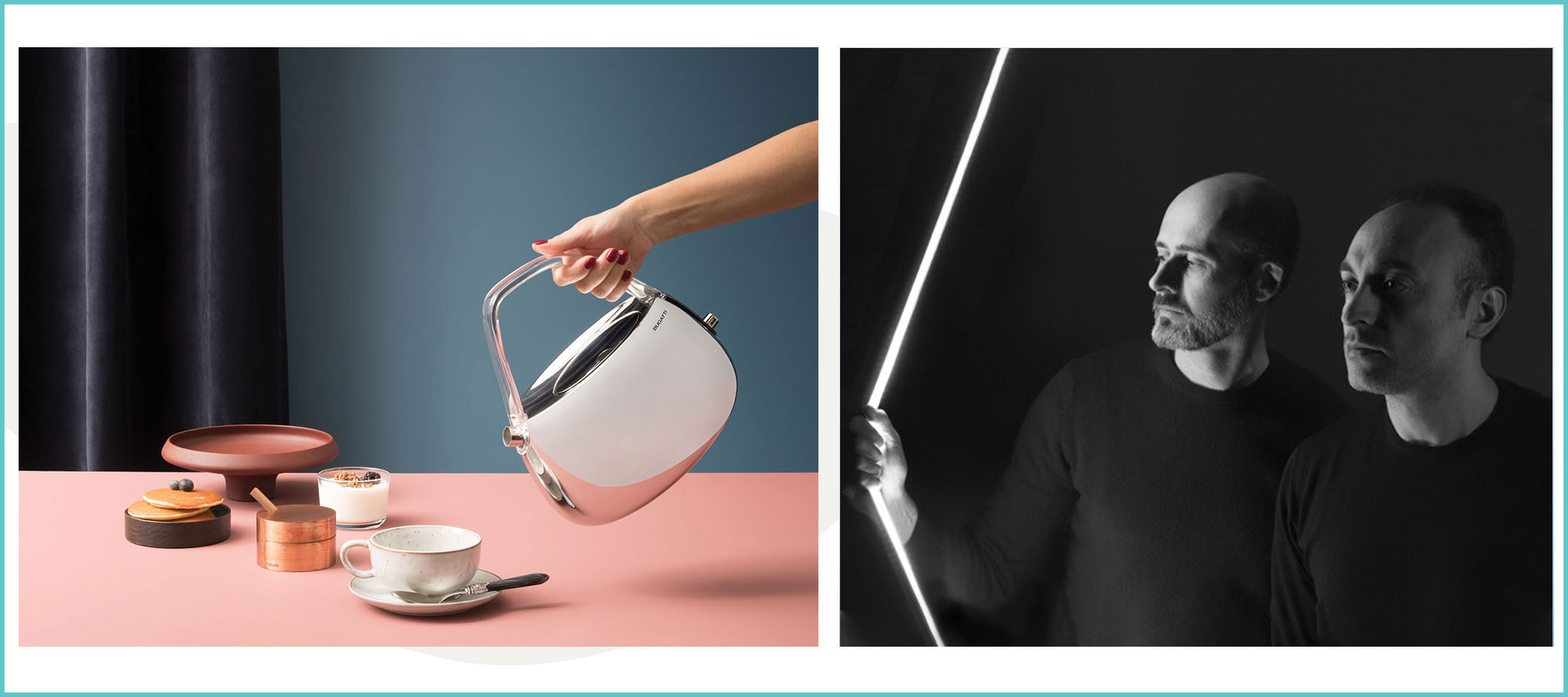
As ingenious was the eventual winner in the Technology category, Jacqueline, the IoT Smart teapot by Innocenzo Rifino and Diego Rossi. Rifino and Rossi’s teapot looks like a handbag; one can imagine it dangling from the elbow of Grace Kelly. Jacqueline heats water to the perfect temperature for whatever delicate tea is being brewed, anywhere from 40 to 100 degrees Celsius, and can keep it at that point for up to an hour.
There’s such variety demonstrated throughout the winners and nominees, and indeed all the thousands of entries to the competition, that it’s hard to isolate a single strand that they all have in common other than the abstract idea of “being desirable.” To paraphrase a famous 1964 quote from a US Supreme Court justice: “I won’t attempt to define good design, but I know it when I see it.” And the nominees’ success was clear from the judges’ reactions.
“Over 7,000 creators from around the world entered the BORN Series this year”, noted Gerry McGovern of the competition. “With such an exceptionally high standard of competition, it was a pleasure to recognise those creators who truly and passionately believe that desirable, functional products, made with integrity, can change the way we live for the better.” Nathalie Bernce, whose global company Smartech acts as a retail hub for the world’s latest innovations, with premium stores all over the world said, “At Smartech we spend a lot of time discovering the best innovations the world has to offer, the cutting-edge trends that our customers love. The BORN winners are at the forefront of this, making the impossible possible.” And Nicole Junkermann, who as both an investor and lover of technology is highly knowledgeable and passionate about world-class design, observed that “At its heart, great design is all about desirability. The most desirable products promote a symbiotic relationship between form and function, delivering an experience that’s effortless and elegant. So the key question I ask when looking at these BORN award winners is: Do I want to own the product they have designed? The answer is invariably yes.”
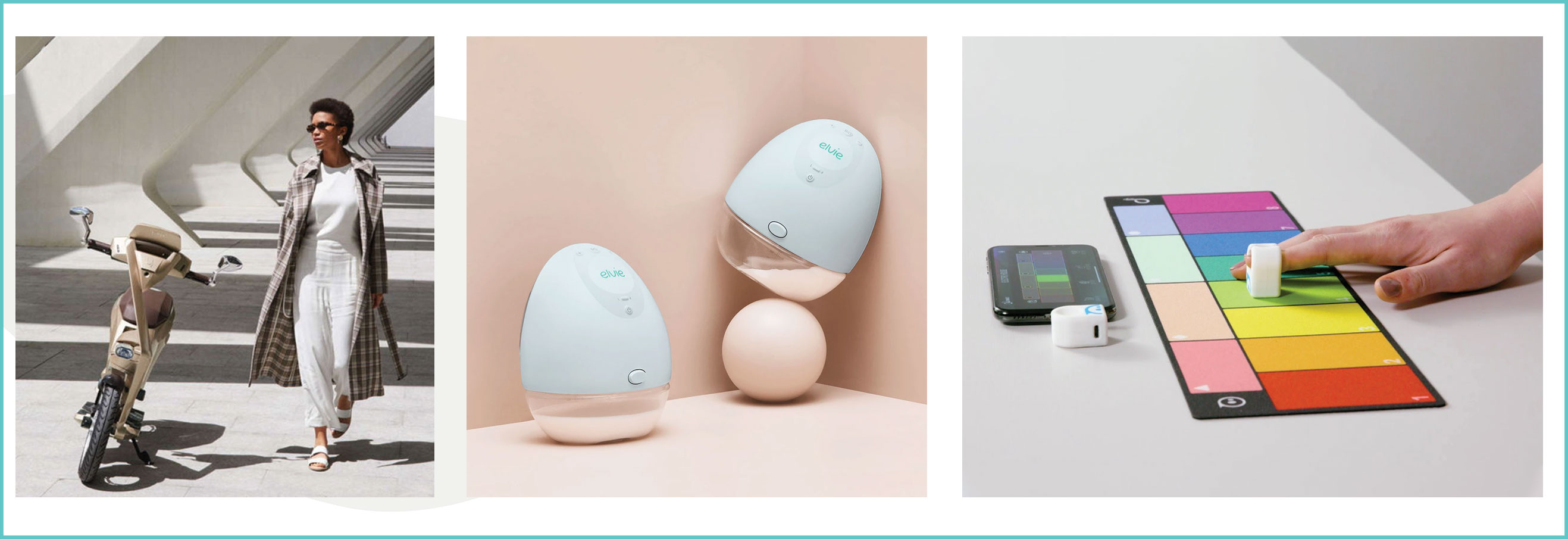
And so to the future. With the mainland European winners announced, design excellence from the UK, USA and international markets further afield will be celebrated. Nominees range from Ujet, a graceful folding scooter with roots in Ulm, Germany, to the UK’s Elvie, a discreet, clean-cut line of health products that put women first, and Sphero, an American initiative to teach children to code and create using programmable robots.
No one idea is the same as any other; each transcends national boundaries and is simple enough for a newcomer to comprehend whilst using ingenious technology. Ultimately, each product has one simple common factor: we desire it.